Showing posts with label Funny Cat. Show all posts

Friday, May 20, 2011

Nice Kitten In Style

What are you looking at babe?

Thursday, May 19, 2011

Pet Health: PZI (Protamine Zinc Insulin)


What is PZI?

PZI (Protamine Zinc Insulin) is insulin combined with zinc and protamine (a protein extracted from salmon testes), which slow the release of the insulin into bodily tissue. Historically, the insulin component of PZI, as well as all other insulin produced for human medical use, was derived from animals, either cows or pigs. Animal-derived insulin is a by-product of slaughtering food animals. The pancreas is ground and transformed into a crystalline powder, which is sold to insulin manufacturers. No animals from countries where BSE (mad-cow disease) exists may be used.

Mass-produced, genetically engineered human insulin has generally replaced animal-derived insulin in use by human diabetics. In the mid-90's in the US, beef-source insulin (including PZI formulations) were phased out by the major producers such as Lilly Pharmaceuticals. Since beef-pork PZI was the insulin most familiar and most recommended for diabetic cats, many were left scrambling (and some were, sadly, unable) to find an effective alternative.

No longer able to obtain beef-pork PZI for their veterinary clients, compounding pharmacists developed a formula substituting human insulin (Lilly markets it as "Humulin") for animal-derived insulin, along with protamine-zinc. Although completely untested in any scientific way, this seems to have been a satisfactory substitute for many feline PZI customers.

PZI sold today by most compounding pharmacies in the US is almost certainly a compound of human “Regular” insulin. Until recently, the only exceptions to this were pharmacists who had hoarded a dwindling supply of one of the discontinued animal-derived insulin. However, in 2000, BCP Veterinary Pharmacy of Houston, Texas succeeded in chemically reproducing Lilly's Iletin I 100% beef PZI (discontinued in 1990), making them the only US source for an all-beef PZI. As for US manufacturers, IDEXX Pharmaceuticals who produces PZI vet doesn't actually have FDA approval for the manufacture. Kellie & chu of the FDMB, contacted the FDA's Center for Veterinary Medicine about this in February 2007. The FDA CVM states that PZI Vet is not FDA approved but is allowed to be marketed under regulatory discretion. PZI Vet is manufactured in a FDA-inspected plant, however. PZI Vet is the first insulin produced for, and tested exclusively for cats rather than humans. Idexx makes the claim that it is "the only insulin scientifically proven to be effective in diabetic cats." That claim is now disputable as more insulin types are now being manufactured and then tested in diabetic cats. You can find more information at the Idexx web site.

Why use PZI?

For a few cats, human insulin does not successfully replace the cat's own insulin, so for them, the source of the insulin is very important to regulation. Bovine (beef) insulin is most similar in molecular structure to feline insulin, and it is thought for this reason, to be most effective for these cats.

In addition, with 2 injections per day, the many cats who do respond to the human forms of insulin, experience better control, consistency and flatter curves with PZI. In some cases, PZI offers longer durations than human insulin (up to 24 hours) allowing one injection per day. Although there is little scientific evidence either way, experientially, among FelineDiabetes.com contributors, there is a strong preference for manufactured beef (or beef-pork) PZI, over the compounded human insulin PZI, which is suspected of sloppy or inconsistent small-scale production, because it deviates from the historical formula for PZI, and has less of a track record.

In the UK, CP Pharmaceuticals has been producing bovine insulin (for humans) for 25 years, and Schering-Plough has recently started to market a veterinary PZI-beef product.

Three forms of PZI sold in the US:

(1) Beef-Pork PZI from IDEXX Pharmaceuticals

Beef-pork insulin from IDEXX Pharmaceuticals (formerly Blue Ridge Pharmaceuticals) is available for sale to veterinarians.

Vets will likely mark up the cost to you, possibly by a lot. Before ordering, ask what your vet will charge you.

IDEXX PZI has a shelf life (unopened) of 3 years from the date of manufacture.

(2) PZI available from US pharmacies

The "PZI" insulin available by prescription from US compounding pharmacists generally consists of "Regular" human insulin (rapid-onset, short-duration) which has been compounded with protamine-zinc to extend its duration. A small number of pharmacists mix insulin from OTHER sources with PZ. They may have sources of discontinued beef-pork from Lilly, Europe, or use pure pork (Lilly Iletin II). You have to ask them, to know for sure what you're getting. Pharmacists combine the insulin with PZ in onsite laboratories, under what should be stringent conditions. Quality controls and checks mandated by the FDA for manufacturers don't apply to compounders. Relatively small batches of insulin may be compounded to order, or monthly, depending on demand. Without strict adherence to procedure, there is a risk of variability between batches and contamination that is greater than when getting insulin from a manufacturer. This is reflected in shorter shelf life recommendations. Some pharmacists, especially those who compound large volumes of PZI, take voluntary measures to ensure a clean, consistent product, such as outside analysis, and incubation to test sterility.

BCP Veterinary Pharmacy is unique as their pharmacists compound PZI with insulin crystals like a manufacturer, although they work in much smaller quantities and under less stringent conditions and specifications. They have chemically reproduced a formula for 100% beef PZI, which Lilly once sold under the name Iletin I. A prescription is required - but unlike IDEXX - there is no minimum order, and they will ship to you directly allowing one to avoid vet markups. As with any compounded formulation, variability between batches may be slightly greater than the stricter tolerances required of manufactured insulin. However, ongoing analysis is conducted by BCP Veterinary Pharmacy to ensure consistent quality control.

Shelf life: Depending on which pharmacist you ask, shelf-life for compounded insulin ranges between 30 and 90 days, which can be less than a manufactured product. They may compensate for this by offering smaller quantities (but they may not charge less). If you test bg's at home, you can judge for yourself if the efficacy is fading. Using sterile techniques and keeping insulin in the refrigerator will prevent or delay bacterial contamination. BCP's shelf life for its regular beef PZI is six months.

(3) 100% Beef PZI from the UK

There are currently 2 manufacturers of 100% beef PZI insulin in the United Kingdom (UK).

CP Pharmaceuticals' Hypurin® is licensed for human use and is therefore sold through pharmacies in the UK (one is listed below), and elsewhere in Europe. The 100% bovine, U100 insulin comes from US cows, and is offered in 4 formulations: PZI, Lente, Isophane (NPH) and Neutral (Regular). Pork insulin (used by some cats), which is structurally identical to dog insulin, and should be similar to human insulin when used in cats, is also offered (in Neutral, Isophane, and 30/70). A prescription is not required when shipping outside the UK. Shelf life once opened is 90 days (refrigerated).

Schering-Plough's Insuvet® is 100%beef, U100, and is approved only for veterinary use in the UK and is available only through vets. It is pure beef, U100 strength, comes in PZI, Lente, and Regular formulations, and has an official shelf life opened and refrigerated, of 28 days.

Import regulations:Good News for US insulin importers. As of November 2006, there is no longer a UDSA permit fee. For those in the US importing foreign insulins (especially beef and pork insulins from CP Pharma) the USDA permit is good for 5 years and the $ 94 permit fee has now been waived for personal importation. Import permits are granted on a case-by-case basis. As soon as USDA updates its website regarding the waiving of the fee, we will provide a link to this new information.

What do the strength numbers (U40, U100) mean?

The vials of what we call insulin actually contain a minute amount of crystalline insulin, which is suspended in a fluid (called diluent) that is mostly water. Pure, crystalline insulin is measured by weight, in international units (iU).

When combined with the other ingredients, insulin strength is expressed as U100, U50, and U40, meaning that there are 100, 50 or 40 international units of insulin per milliliter (ml) of diluent (the fluid). A ml of U40 contains 40iU of crystalline insulin, and therefore a 10ml vial will contain 400iU. The same vial of U100 strength, contains 1000iU of insulin, or 2.5 times as much. Think of U100 as being more concentrated than U40.

IDEXX PZI comes in U40 strength, CP Pharmaceuticals Hypurin® comes in U100 strength, and the compounded human "Regular" PZI's come in a variety of strengths. If your cat takes a very small dose, the more dilute insulin strengths can be easier to measure.

Syringes are designed to be used with a specific strength of insulin. U40 syringes contain a full cc (equivalent to 1ml) and have 40 unit marks. Measuring U40 insulin to the one unit mark in a U40 syringe, will contain 1iU of insulin. U100 syringes are most popular in a 3/10cc size, with 30 marks (100 marks per full cc). Measuring U100 insulin to one mark in a U100 syringe will also contain 1iU of insulin. Note that although the two syringes hold the same amount of active insulin, there's more (2.5 times as much) fluid in the U40 syringe -- it's more dilute.

UIDEXX PZI comes with a supply of U40 syringes. Some people like the U40 syringes for their more widely spaced unit markings, making small increments easier to see. Others feel there are advantages to using U100 (3/10cc capacity) syringes with U40 insulin. One unit of U40 insulin (1/40th of a ml) measures 2.5 units in a U100 syringe, so a very small dose of U40 can be more accurately measured in a U100 syringe, although it takes an eagle eye. U100 needles come in finer gauges (29 or 30 gauge, versus 27g with U40) and come in shorter and longer lengths, versus 1/2" for IDEXX U40. The rubber seal on IDEXX U40 is quite stiff and may bend a few syringes when using finer gauges.

WARNING: IDEXX specifically advises against doing a direct conversion between doses when changing insulin types. They recommend a starting dose of .1-.3 units per pound (or, .22-.66 units per kilogram) regardless of the old dose. For a 10-pound cat, the starting dose range would be 1-3 units (in a U40 syringe), or, multiplying by 2.5, 2.5 - 7.5 units of U40 insulin in a U100 syringe.

For help in converting between U40 and U100, please see our insulin conversion chart.

What about shelf life?

The factors affecting shelf life of a vial that has been opened are, exposure to light, accumulating contaminants from re-used syringes (or even new syringes), mixing with incompatible insulins, lack of refrigeration (loss of sterility), and at some point, chemical instability. Home testing will enable you to determine for yourself whether the insulin is maintaining its effectiveness. You will not be able to tell whether it is still reasonably sterile, or is teeming with bacteria. You should not use insulin that suddenly looks different. PZI is clear (not cloudy) with white sediment (no clumps), that when mixed gently, looks like watery milk. Compounded insulins, as well as user-diluted or mixed insulins have an opened-life of 30 to 90 days.

Which PZI should I get?

It is impossible to predict which insulin will work best for your particular cat. Two diabetic cats in the same household (i.e. same diet and schedule) can respond differently to the same insulin.

If your cat doesn't respond even to large doses of human insulin, meaning that blood sugar consistently stays very high despite doses larger than 1 unit per pound, and assuming there is not another serious problem causing the high blood sugars, it makes good sense to try the bovine PZI.

If your cat responds to human insulin, but bg's (blood glucose values) cannot be maintained within the ideal range of 100-300mg/dl (5.5 - 16.7 mm/ol), by all means consider PZI (either animal or human), but first, review the "lifestyle" suggestions below.

Lifestyles of the diabetic cat

Most people with a newly diagnosed diabetic cat start treatment with human insulins, injected twice a day, since they are widely available, relatively inexpensive, and will work well for many cats. If you're inexperienced (and/or have an inexperienced vet), and the insulin you're using "doesn't work", realize that the insulin is only about half the treatment. There's a great deal that you can learn to do to help the insulin (whatever it is) work longer and better. Even if you've been around the block a few times, if you’re having difficulties, these points are worth reviewing.

Many people turn to PZI because their cat exhibits wide swings in blood sugar levels, from 400+ (or more) to sub-100's, but with extremely variable (unpredictable) readings at all points on the curve. Very often, this is due to giving too much insulin without sufficient testing to see the whole cycle. If this is the case, cutting the dose in half (or more) for several days and more frequent testing will result in a flatter curve AND lower average numbers. Excessive doses of insulin can mean steep roller coaster curves, with peak readings (the insulin's strength is at its peak, and blood sugar is lowest) that vary from being dangerously low, to being higher than desirable. Large doses affect the insulin's duration as well, and may cause excessive overlapping of the next dose (a sign of this is a dinner bg reading much lower than the breakfast reading). If doses are overlapping, changing doses "on the fly" is inadvisable because the effect of the overlap on the next dose will always vary. It is most important where overlap is suspected to find a minimal dose that can be given consistently.

Insulin acts to push blood sugar levels down, diet is a major factor in what pushes blood sugars up. We try to balance the effect of the insulin with the appropriate diet and feeding schedule to obtain a flat curve in the target range (300 to 100mg/dl). With PZI, as with any long-acting insulin, the role of diet cannot be overstated. It is almost impossible to manage a large post-meal surge in blood sugar with a long acting insulin such as PZI (or Ultralente), due to its slow onset, and weak action. Trying to do so usually means excessively large doses, steep curves and widely variable readings at shot time. You can help a weak-acting insulin to control blood sugar by making dietary changes, and you'll get flatter curves and lower numbers overall. To avoid post-meal surges, make sure the diet (even if recommended by your old-school vet) is low in CARBOHYDRATES. Dry cereals (especially diets created for weight-loss) always have significantly more carbohydrates than wet food. When switched to an improved, carbohydrate-restricted, high protein diet, some cats produce enough insulin themselves and no longer need injected insulin. Cats are carnivores, and require no more than 6% carbohydrate (cereals contain as much as 30 or 40%). Purina has done case studies (soon to be made public, 1-800-222-8387 for more info) in which they observed that 93% of cats lower or eliminate insulin requirements when fed their new canned food called Purina CNM DM-Formula (prescription only). It is high in fiber and protein, low in carbohydrates. If you're unable to halt the post-meal surges without large doses, even with a corrected diet, consider trying a combination of a long-acting insulin at 12-hour intervals to provide "fasting" coverage, augmented at mealtimes with a fast-acting, short-duration insulin (use 2 syringes unless you know they're compatible. Usually only a fractional unit of the fast-acting insulin is needed, so you can dilute it.) Caution: substantially reducing carbohydrates in the diet is a POTENT factor in reducing blood sugars and altering bg curves, and it should not be done without also reducing insulin, and careful monitoring.

To get consistent curves, the diet must also be consistent. Caloric intake and schedule should be the same, day to day. If replacing dry food with canned food or "people food", be careful to replace the calories as well; dry foods have 3 or 4 times the calories, by weight. More calories require more insulin, fewer calories require less. Other sources of inconsistency: free feeding in a multi-cat household is not desirable. Canned foods may vary quite a bit in carbs and calories, depending on the "flavor". Detailed nutritional information can be obtained by calling the phone number listed on the can or bag. Be sure to compare equal caloric amounts.

Increasing soluble fiber (metamucil, psillium husks) is thought to slow and even out the process of digestion which may flatten out the insulin's peak (the lowest point on the bg curve) as well as moderate the post-meal rise in blood sugar. Be sure to monitor carefully when adding fiber.

Just enough duration from the previous dose to overlap the new dose while it's gaining strength is desirable. Too much overlap will (sooner or later) drop blood sugar too much. You’re aiming for 12-hour blood sugar values within around 10% of each other. Remember that even before you’ve achieved regulation, you want a gentle curve that gradually gets lower overall as dosage increases. A steep drop from a very high reading, to a good peak cannot achieve regulation in the end. 12-hour readings should be close enough to each other that dosage can remain consistent. If the 12-hour reading is so much lower that you cannot repeat the same dose consistently (assuming that the peak will also be a lot lower), you will have a roller-coaster situation where the affect of duration will always vary. The difference between doses that are "too much" and "too little" can be minute -- as little as a quarter-unit. If your cat is very sensitive to small increments, consider the more dilute PZI from IDEXX (U40 strength) and use a U100 syringe if necessary (see "Strength" discussion below). Unlike other insulin, diluting PZI yourself, is not recommended.

Make sure that you're keeping a consistent injection schedule, so that blood sugars don't get out of control due to an injection given too late, and don't plummet because the injection is given too early. What is "too late" and "too early" will depend on the insulin's duration for your cat.

For various reasons, insulin may be absorbed erratically, and this may affect large doses more than small ones. Avoid using the scruff of the neck for injections, as there is insufficient blood supply to that area. Rotate the injection site to avoid building scar tissue and consequent absorption problems.

Certain conditions render bodily tissue insensitive to insulin, this is called insulin resistance. Obesity is a major cause of insulin resistance. One of the most effective (and most challenging) ways for a fat cat to lower bg levels, and possibly eliminate the need for injected insulin altogether, is by losing excess weight. Exercise, smaller portions of a carb-restricted diet, reduced fat, or restriction or elimination of treats are ways to accomplish weight loss. Note that dry foods sold as low calorie, high fiber, for “Seniors” or weight-loss may be higher in carbohydrates, lower in protein than normal dry food (which is already higher in carbs than wet food), and should not be given to diabetics. Something is wrong if your cat appears to be "starving" -- he or she may have very high, or very low blood sugar at that time -- it is not necessary or desirable to starve your cat. High blood sugar alone is a major cause of insulin resistance -- you will notice that the same dose will have more impact when given at lower bg levels than at high levels.

Other causes for consistently high blood glucose values are, pregnancy, stress, certain medications (corticosteroids), infection (diabetics are especially susceptible to urinary infections) and disease (renal, hyperthyroidism, liver disease and cancer to name a few). These possibilities should be ruled out.

How Much Insulin is Too Much?

The Cornell University Feline Health Center has addressed the topic of high insulin doses in cats. Excessively high insulin doses are those greater than one to two units of insulin per pound per day. Felines who use more insulin than this should be evaluated more intensively. Other diseases may be underlying or complicating the diabetes mellitus and as a result, necessitate high insulin dosages. Problems with insulin injection, poor absorption or too rapid metabolism of insulin, or even insulin overdose are potential causes of an apparently excessive insulin requirement.

Essential Cat Training Tips

Cats are extremely sociable animals even though cats tend to give an image of solidarity and aloofness. Cats that are well trained can form successful relationships with you and your family including other family pets. A well trained cat also caused fewer social problems and minimized nuisances and embarrassments for you down the road.

While instilling discipline into your cat is important, tough punishment must be avoided. Instead use positive actions and avoid negative ones when training your cat. Negative actions such as hitting or yelling are not generally acknowledged by them. Cats are known to associate these adverse actions with you rather than with their bad behavior. And as a result, the relationship between you and your cat will be strained.

To maintain and forge a loving and warm relationship with your wonderful cat, you can use the following tips to help you solve your cat’s behavior problems.

Train them young
When your cat is still young, he is more open and responsive to training. Bad behaviors have not yet been formed and not given a chance to develop. The older he gets, the harder it will be to train your cat.

Give them regular love and attention
Do not use harsh or bitter tones to reprimand your cat; instead a gentle hug, caress, or a whisper has a longer lasting effect. Your relationship with your cat should be fun, rewarding, playful and interesting. Sometimes this change alone will solve your cat behavior problem. Cats when they are bored are known to become overly active and destructive. By playing with your cat daily and giving him regular relaxing massages can help to calm your kitty down. Cats normally stop using their litterbox when they feel neglected. With regular sessions of attention and play time, even litterbox problems can vanish almost overnight.

Reward them for good behavior
Cats are creatures that love rewards and fear punishment. Cats will only do things that they find pleasurable and rewarding to do. Reward your cat for good behavior. Give rewards such as treats, sweet talking or gently stroking the cat to let him know that you approve of the way he is acting.

Let them know what is acceptable and what is not
Educate your cat on what is correct and acceptable behavior and what is not. Reward him for good behavior. Cats have very short attention span and they tend to forget what they did a minute ago, much less hours ago. In order for you to discipline and make your cat learn, you must catch your cat in the act. As cats hate water, one effective way of making your cat learn is through the use of a spray bottle or squirt gun to startle your cat when you catch him misbehaving. Another method is the use of a whistle to create a loud noise to startle your cat as cats loathe loud noises.

Make your training sessions short but frequent
Training sessions should be brief but frequent. Cats are known to have short attention and interest spans; so it is important to make your sessions brief to be more effective.

Systematic training will do the trick
Owners must design their training programs. The program depends on their cats' attitude. Things to be included in the program are the specific tasks that the owners want their cats to do and the corresponding rewards. This method will deliver the results that you want only if you stick to the program that you did. Consistency is a key factor at this stage.

Albert recently developed a eCourse for looking after your cat's mental and physical needs. If you are interest in learning more about this free eCourse and taking good care of your cat, please go to http://catcentral.justastore.com or you can send an email to catcentral@getresponse.com to request for your free eCourse.


Source: High Quality Article Database - 365articles.com

Pet Health: BG Monitoring


Home Blood Glucose Testing of the Diabetic Cat

If you have a diabetic cat, consider doing home blood glucose testing. After a few tests, the vast majority of cats won't mind this at all. Advantages of home testing include less stress to your cat, considerably decreased costs and time of monitoring compared to vet visits, closer control of your cat's blood glucose level by more frequent monitoring, and possible avoidance of deadly hypoglycemic episodes.

This technique and the results should be discussed with your vet before any changes in the amount of insulin you give your cat.

NOTE: There is some information on working with blood glucose (BG) curves in the "Diabetes for Beginners" section of this web site.
Links to glucometer testing videos and slide shows:
Veterinary Partner
Punkin's Movie
Home blood testing with Harry
Amanda's hometesting page
Ear Prick illustration
Test strip illustration
Jock's insulin pen and testing
Materials for home testing

* Glucometer
o If your instruction book confuses you, see if there is an 800 number to call so a company representative can guide you through the first-time setup and calibration.
* Test strips
* Lancets; a lancet pen probably came with your meter. You can use this pen or just hold the lancet for a "free hand" stick. Starting with the lancet pen is recommended.
* OPTIONAL:
o Warm washcloth or a rice-filled sock that has been heated in microwave for 15 seconds - CHECK THE TEMPERATURE ON YOUR WRIST
o Facial tissue or cotton ball to apply pressure to the puncture site after the test
o Small flashlight

Tips for Success

* Read your glucometer manual.
* Put all the materials on your right if you're right handed or on your left if you're left-handed.
* Begin by petting and stroking your cat, speaking in affectionate tones
* Do NOT clean the stick area with alcohol. If dirty, use water and then dry thoroughly.
* Use the cloth or sock to warm the ear or paw pad before pricking to increase blood flow and enlarge the capillaries and veins. Alternatively, gently massage the area with your fingertips.
* If you use the lancet manually (not in a pen), prick at a 45 degree angle.
* Praise your pet and consider giving a treat.

Method

* Assemble all your materials and wash your hands.
* Position your cat so both of you are comfortable.
* Locate a vein on your cat's ear by shining a flashlight behind it. The vein will look like a red string and should be near the edge of the ear. If you are using a paw pad, use the large pad.


Photo courtesty of Pawprints and TEN

* Use the cloth or sock to warm the ear or paw pad before pricking to increase blood flow and enlarge the capillaries and veins. Alternatively, gently massage the area with your fingertips.
* Position the lancet and do the prick.
* Touch the tip of the test strip to the top of the blood drop at a slight angle.
* If necessary apply slight pressure to the prick site for a few seconds to stop the bleeding.
* Wait for the glucometer to give the final reading. Most glucometers will warn you if there is insufficient blood on the test strip.
* Record the date, time, and glucose reading in a notebook. Your meter will store a lot of data, but you should always back up your data manually or, if available with your meter, download the data to your computer periodically.

Links and tips from others:

Testing for Feline Blood Glucose - the Movie!
Ear sticks: 5 contributions
Footpad sticks: 2 contributions


Ear Sticks

I. Contributed by Julie Paque

Supplies needed:

Blood glucose monitor that requires a small amount of blood. (I use the Precision Blood Glucose Monitor made by Medisense. It needs only 5 micro liters of blood, vs. up to 30 micro liters for other monitors. Their customer service at their 800 number is great, too.) These are available from your local pharmacy, and a rebate is also often available, bringing the price down considerably. The companies make their money with the test strips, not the meters.

Test strips for monitor (most come with a learning supply.) These run about $ 35-40 for a supply of 50 strips.

Microcapillaries, 75 mm long by 1 mm diameter. You can use heparinized or non-heparinized, it doesn't matter, so go for what you can find or is cheaper. Your vet may be able to help you get some, or a medical or chemistry supply store. Use one per test.

A bulb with a hole for the end of the microcapillary (optional, to blow the blood out of the capillary onto the test strip.)

Tissue or gauze pads


Outline of procedure:

You will use the lancet included in the blood glucose monitor kit to prick the ear of your cat. The microcapillary will pick up the blood drop from the ear and you will put it on the test strip.


Detailed steps:

Learn how to use the meter, testing on yourself.

Getting blood from the cat:

a. Look carefully around the edge of the ear, you'll see a vein running just inside the edge. You may need a flashlight to see the vein, shine the flashlight from under the ear and the vein is visible even on dark haired cats.

b. When learning it is best to test the cat when he's warm. Such as when he's been sitting in the sun, or curled up in a particularly warm spot. You'll notice a big difference in the temperature of the ears, and it is much easier to get blood from warm ears than from cold ones! Later on when you have the technique down you'll be able to do it even when they're cold, but make it easy on yourself by optimizing conditions for you and the cat.

c. Have a folded tissue or gauze pad, the lancet, and the capillary ready. Put the cat between your knees, facing away from you. Keep your feet together so he can't back out. Don't wash the ear with water or alcohol before you prick it, you'll never be able to collect the blood.

d. You're going to use the lancet to prick the ear near the vein, if you hit the vein you'll get plenty of blood, if you're near it you'll still be able to get enough. Put the tissue underneath the ear so you don't prick yourself and contaminate the blood sample. You may need to prick more than once initially to get enough blood, gentle massage around the site will also encourage the blood to come out. After you've done a series of tests in the same area it becomes slightly swollen and it is easier to get the blood on one prick.

e. Pick up the blood with the capillary. For the Precision monitor I need a little more than 5 mm of blood in the capillary in order to perform the test. It just so happens that the capillaries that I am using have a line at the 5 mm mark. Set the capillary with the blood aside and use the tissue to apply pressure to stop any bleeding on the cat's ear. Give him a big hug for cooperating and let him free.

f. Put the test strip in the monitor and wait for the ready signal. Put the blood on the strip. If you have a bulb for the end of the capillary cover the hole and squeeze to get the blood out of the capillary. If you don't have one you can blow through the opposite end. Record the results in the booklet.

If the results of any test seem unusual it is always a good idea to repeat the test. Don't ever make radical changes in what you're doing based on a single results. And it's always a good idea to keep your vet up to date on the results of your testing and work with him or her to determine any changes necessary to your cat's regimen.


II. Contributed by Darlene

I have a Glucometer Elite, and love it. All you need is a drop of blood the size of an "o" in newspaper print. No separate capillary tubes -- it's built right into the test strip. I do ear sticks when I test, which isn't often these days because Pooter is doing so well. Before he was regulated, I did my own curves and plotted them for the vet to look at rather than taking the cat in for a whole day, and spot-checked once in a while when he wasn't acting right.

The chemical reaction in the test strip is very sensitive to humidity and anything else that can get into that little slot, so you have to be both careful and quick. Once you put the test strip into the machine, you only have three minutes to get the sample, which may not be enough while you're still learning how to keep the cat from flicking his ear and sending the blood drop off into space.

Here's my sequence. First I open an alcohol swab and twirl the lancet in it a few times to clean it off, then I open the foil test strip packet and put the strip into the meter just far enough to sit there but not far enough to activate it. Then I use the swab to sterilize the closed end of the packet and a patch of table for the cleaned packet to rest on.

Then I snuggle the cat and massage his ear until its good and warm (bleeds easier then ... some people bring a lamp down close to warm up the ear). Then I stick him, and if he doesn't bleed right away I massage the ear from the base up towards the pinhole and that sometimes brings up a small drop, otherwise he gets stuck again. Now you have to be quick, because that tiny drop congeals fast.

I scoop the drop up onto the sterilized end of the foil packet and release the cat -- takes both hands to slip the open end of the packet back over the test strip to protect it from contamination while you push it the rest of the way into the meter (without losing the drop of blood on the other end). In a couple of seconds the meter says it's ready, and you just touch the droplet to the end of the test strip until it's sucked up and you hear the beep.

If your cat is more cooperative than Pooter, you'll find that in no time you can warm the cat's ear up first, then start the meter, do the stick, and take the sample right off the cat's ear. More often than not, the irritation of the poke and the blood sitting there will bring on twitches, so I had to find a way of getting the sample onto a sterile surface before he bled all over the kitchen.

Oh -- I was told not to use alcohol or anything to clean the cat's ear for this, since it just inhibits bleeding and might contaminate the sample. The bleeding stops in seconds, and he's had no infection or irritation despite the kazillion times I poked him in same spots. I do re-use the lancets, and clean them with alcohol before and after each use. I tried using the spring-loaded pen that jabs the lancet quickly, but the noise made him jump, so now I just hold the lancet itself. It's easier to aim right at the little vein if you can see the sharp tip and exactly where it's going, too.

The glucometer is a great idea, and Pooter wasn't even close to regulated until I curved him with it several times. You'll know exactly what's going on with his blood sugars at the exact time you need to know -- this means you can tell when his insulin peaks, how far down it's taking the BG and for how long, and adjust his feeding (quantity and quality) to perfectly cover the insulin. Urine testing never gives you this precision -- it only tells you that at some point over the last X hours, the BG did or didn't get high enough to cause glucose dumping (and if it did, you don't know when or for how long -- all you know is that the BG was high enough for dumping to occur, which is the same level at which organic damage is being done). The meter will pay for itself in reduced vet visits, too. The main benefit for Pooter is that with close monitoring, a lot of the damage done to his body by poorly controlled diabetes is reversing -- his legs are stronger, his kidneys are concentrating urine instead of washing out glucose, etc. etc.

The main benefit for me is is that I got my life back -- I can inject him, feed him, and take off for the day without worrying whether he died in agony while I was out. For several months I absolutely had to be there when the insulin peaked, because he had so many reactions, or over-feed him to make sure there wasn't one, so he got fatter and fatter and sicker and sicker. We're both much happier now!

Darlene


III. Contributed by Kathy

Procedure for Home Testing of Blood Glucose using a Glucometer Elite Meter and a Lancet Device: Ear Sticks or Paw Sticks
. The "Follow-up" section of this monograph has an excellent description of using a spreadsheet to track your cat's progress.


IV. Contributed by Donna B.

A nice comprehensive write-up of this caretaker's approach to glucose monitoring.


V. Contributed by Eileen Swords RN, BA, BSN

I recommend the Fast Take monitor & the Soft Touch automatic lancet. (I am an NICU RN with 20 years of experience).

It is a very good idea to do all glucose testing in a "procedure room" in the house (in our case, it's our spare bedroom & we now call it the "torture room"). The rationale for this is that the cat will be able to truly relax in the "safe" areas of the house. We use this technique in the hospital with our Peds patients so that they feel more relaxed in their hospital room. Our kitty gives us a very pained look when he is taken in "the room", but he is VERY HAPPY when he is ANYWHERE else. We have not done this with the Insulin injections because he really does not seem to mind them.


Footpad Sticks


I. Contributed by Jerry

I just wanted to add my endorsement of the Glucometer Elite brand for home glucose testing. I tried another (cheaper) brand but was not able to obtain a large enough drop of blood for a reliable test. Glucometer Elite requires about one-fifth as much blood, making sampling much less traumatic on cat and owner.

I don't use the lancing device supplied with the Elite. Rather, I use a standard pen-shaped lancing device. I use the head attachment intended in humans for thick, calloused skin - for a bit deeper puncture. Press this FIRMLY into the big pad on kitty's rear foot. My cat had not cried nor flinched with this method. Finally, transferring the tiny drop of blood to the strip is easy; the strip itself wicks the sample into a little chamber. There is no continued bleeding, by the way. ***layman's experience only - your results may vary*** - I offer this as an alternative to using the marginal ear vein.

Best of luck to all, Jerry


II. Contributed by Kathy

You may need to stick with the lancet manually or use a lancet device that gives deeper penetration (e.g., SoftClix with adjustable depth) and larger lancets to get enough blood. Otherwise it shows real promise as an alternate site to give the ears a break. Our cat doesn't even move, like she doesn't even feel the stick.

First wipe off the large pad on one of the paws with warm water and dry it. Press the lancet device FIRMLY against the pad and release the lancet. Then squeeze the pad to get a blood drop. Continue as described with ear sticks.

Wednesday, May 18, 2011

Tin Cat

Poor cat, has only the home of cans that are not intact health. Whats. My cat .. allow me to brought you go from here to eternal paradise ...

Tuesday, May 17, 2011

6 Key Cat Training Tips

Cats are extremely sociable animals even though cats tend to give an image of solidarity and aloofness. Cats that are well trained can form successful relationships with you and your family including other family pets. A well trained cat also caused fewer social problems and minimized nuisances and embarrassments for you down the road.

While instilling discipline into your cat is important, tough punishment must be avoided. Instead use positive actions and avoid negative ones when training your cat. Negative actions such as hitting or yelling are not generally acknowledged by them. Cats are known to associate these adverse actions with you rather than with their bad behavior. And as a result, the relationship between you and your cat will be strained.

To maintain and forge a loving and warm relationship with your wonderful cat, you can use the following tips to help you solve your cat’s behavior problems.

Train them young
When your cat is still young, he is more open and responsive to training. Bad behaviors have not yet been formed and not given a chance to develop. The older he gets, the harder it will be to train your cat.

Give them regular love and attention
Do not use harsh or bitter tones to reprimand your cat; instead a gentle hug, caress, or a whisper has a longer lasting effect. Your relationship with your cat should be fun, rewarding, playful and interesting. Sometimes this change alone will solve your cat behavior problem. Cats when they are bored are known to become overly active and destructive. By playing with your cat daily and giving him regular relaxing massages can help to calm your kitty down. Cats normally stop using their litterbox when they feel neglected. With regular sessions of attention and play time, even litterbox problems can vanish almost overnight.

Reward them for good behavior
Cats are creatures that love rewards and fear punishment. Cats will only do things that they find pleasurable and rewarding to do. Reward your cat for good behavior. Give rewards such as treats, sweet talking or gently stroking the cat to let him know that you approve of the way he is acting.

Let them know what is acceptable and what is not
Educate your cat on what is correct and acceptable behavior and what is not. Reward him for good behavior. Cats have very short attention span and they tend to forget what they did a minute ago, much less hours ago. In order for you to discipline and make your cat learn, you must catch your cat in the act. As cats hate water, one effective way of making your cat learn is through the use of a spray bottle or squirt gun to startle your cat when you catch him misbehaving. Another method is the use of a whistle to create a loud noise to startle your cat as cats loathe loud noises.

Make your training sessions short but frequent
Training sessions should be brief but frequent. Cats are known to have short attention and interest spans; so it is important to make your sessions brief to be more effective.

Systematic training will do the trick
Owners must design their training programs. The program depends on their cats' attitude. Things to be included in the program are the specific tasks that the owners want their cats to do and the corresponding rewards. This method will deliver the results that you want only if you stick to the program that you did. Consistency is a key factor at this stage.

Albert recently developed a eCourse for looking after your cat's mental and physical needs. If you are interest in learning more about this free eCourse and taking good care of your cat, please go to http://catcentral.justastore.com or you can send an email to catcentral@getresponse.com to request for your free eCourse.


Source: High Quality Article Database - 365articles.com

Do you know CAT Training?

Hello there...
Harry C here, your online Personal Trainer and Sports Nutritionist.

A little bit about my backgroung:

I was born in Athens, Greece on 1978 and as I grew up it was obvious to me and others that I was crazy about anything that had to do with sports or athletics. I'm 2 times World Champion at Tang Soo Do martial art, and played Basketball, Gymnastics, Dancing, you name it. When my college age came I studied and graduated on sports sciences and sports nutrition. So, I became a certified sports nutritionist and fitness trainer. The thing I want to talk about in this article is a concept, a factor that enhances your bodybuilding and weight training and thus, your strength, power and fat burning.

This "Repetition Method" as i call it is my favourite and my clientel's favourite for the past 4 years with tremendous results.
The method is called Compensatory Acceleration Training (aka CAT) method.
It is the perfect method to make the most out of your valuable time in the Gym.

A little bit of a background on this:
In 1982 Dr. Frederic C. Hatfield talked about the concept of compensatory acceleration training or CAT. Dr. Hatfield claimed the following benefits for CAT: greater efficiency, fewer injuries and greater explosive power. Hatfield defined compensatory acceleration as "pushing as hard as possible throughout the movement" , i.e. a high action velocity. Interestingly, years later a study by Jones et al. supported Hatfield's contentions by finding that CAT was superior to traditional standard weight training for developing upper body strength and power.

However, it is generally agreed that a major shortcoming of both CAT and traditional standard weight training is the large negative acceleration phase that typically occurs, especially when lighter weights are used. For example, Elliot et al. revealed that during 1-RM bench press, the bar decelerates for the final 24% of the range of motion. At 81% of 1-RM, the bar deceleration occurs during the final 52% of the range of motion. Some years before the compensatory acceleration article was written by Hatfield, Dr. Gideon B. Ariel had recognized the problem with the deceleration phase and had designed and developed his Dynamic Variable Resistance exercise machine to compensate for it.

"Repetitions should be performed as fast as possible with maximal mental concentration for recruitment of the maximum firing levels of muscle fibers as required in maximal human performance." — Gideon B. Ariel, PhD

The above quote from Dr. Ariel was in a twenty page booklet that was written almost thirty years ago introducing Universal's new Dynamic Variable Resistance (D.V.R.) weight machine. The name of the booklet was "Understanding the Scientific Basis behind our Universal Centurion". The booklet and subsequent research study done by Ariel are of particular interest to me because of my patented free-weight variable resistance system that I have been working on since 1996.

The section I pulled the quote from was entitled "Resistance Exercises and Ballistic Contraction". In this section Ariel laid out his two central variable resistance training principles.....

1. The resistance exercise should be performed using multiple joint motion.

2. The resistance exercise should be performed with explosive repetitions.


It was very clear in this publication that Universal and Ariel, knew, understood and appreciated the importance of explosive strength for athletes and centered their scientific presentation and marketing efforts around that need. Many variable resistance machines have come and gone since, but to the best of my knowledge, this was the only one that advocated "explosive repetitions" and "variable resistance" as a superior way to train.

However, does this work with Free Weights?

Explosive repetitions or maximal voluntary contractions performed with a free-weight variable resistance system like the BNS Bands System clearly meets the criteria for an "explosive strength training exercise" as defined by Stone (9) in his Position Statement and Scmidtbleicher in Strength and Power in Sport......

Stone – "Exercises used to develop explosive strength are defined as those in which the initial rate of concentric force production is maximal or near maximal and is maintained throughout the range of motion of the exercise."

Scmidtbleicher – "Explosive strength can be defined as the neuromuscular system's ability to generate high action velocities."

Just as Ariel and Hatfield have stated, the individual should make a willful effort to push the weights as hard and as fast as possible throughout the range of motion on every repetition. Because of the additional resistance provided by the bands as they stretch in a linear fashion, the action velocity, muscular contraction speed and the resulting force production can be kept at a high level throughout the range of motion. Without the variable resistance provided by the bands, the deceleration phase of squats and benches etc. would adversely impact the effectiveness of those exercises as explosive strength exercises - as defined by Stone et al.

Ok Here's how Cat Works in action: lets's take the Bench Press For Example.
You want to lower the bar in controlled movement and just before the bar touches your chest you explode it back up as fast as you possibly can BUT make no mistake here this will be compensatory acceleration ONLY is 2 factors are present.

1. You should work at 65 - 85% of RM in order fo this to work because with less weight than that, you won't have CAT you will have just momentum speed! and that could be hazardous to your joints. The muscle explosion doesn't show in the naked eye, it is just happening in the muscle as you try push a relatively big weight in high speed.

2. The weight must never stop in either phase of a repetition! Nore the eccentric or the concentric phase the bar or leg press ot cable must always be on constant motion and never pause at a repetition.

That's it! Just lower the weight slowly and WITHOUT PAUSING at the bottom of the movement, explode back up as fast as you can again without pausing at the top of the movement. All that must take place in full range of motion.

This method of training can take your workouts to an all new level and be stronger, build more muscle, be leaner and burn more fat, and burn much more caloried because of the increased muscle fiber recruitment.
For more info and products that can help you improve your health and fitness visit my website at www.health-balance-reviews.com

Till Next Time...
HarryC
Health-Balance-Reviews.com


Source: High Quality Article Database - 365articles.com

Cat Breeding Profile: Somali


The Somali is a breathtaking cat to behold. It bears an uncanny resemblance to a little fox, with its large ears, masked face, full ruff and bushy tail. The Somali’s wild, feral look is what immediately draws fascinated attention.

Somalis are intelligent cats, and while active, they have soft voices and are usually quiet. They communicate with human family members through soft mews and possess a charming trill. They are extroverts and very social. Possessed with a zest for life, they love to play, solicit nuzzles and pats, and thrive on human companionship. Somalis have bursts of energy several times a day, at which time they will take off through the house, jumping into the air. They toss balls and toys in the air, fetch them back and begin the game anew. Tail and back arched, the Somali will run sideways like a monkey, and even hold objects and food the way a monkey does. Adept at opening cupboards and drawers, Somalis sometimes hide inside their secret areas. Many Somalis can manipulate faucets, and they love to play with water.

Somali
Pictured: Second Best of Breed GC, RW FAIRYTOWN DYNASTY OF LEO STAR, Ruddy Somali Male
Photo: © Satoshi Daichi

Somalis are well-proportioned, medium to large cats with firm muscular development. Their body is medium long and graceful, with a medium-length soft and silky coat that requires little grooming. The coat is usually one to three inches long, with shorter fur across the shoulders. The tail is fluffy and full; their feet have tufts between the toes. Their large, almond shaped eyes range in color from intense green to rich copper. The Somali has an agouti, or ticked, coat with four to twenty bands of color on each hair. The ticked fur mantles the cat with harmonizing solid color on its underside. They come in four recognized colors: ruddy, red, blue and fawn.

Somalis have small litters of three to four kittens, which develop slowly. They reach their full size at about eighteen months of age.

Somali
Pictured: Third Best of Breed GC, RW SUNFOX WILD BLUE HUCKLEBERRY, Blue Somali Male
Photo: © Chanan

Pricing on Somalis usually depends on type, applicable markings and bloodlines distinguished by Grand Champion (GC), National Regional winning parentage (NW or RW) or of Distinguished Merit parentage (DM). The DM title is achieved by the dam (mother) having produced five CFA grand champion/premier (alter) or DM offspring, or sire (father) having produced fifteen CFA grand champion/premier or DM offspring. Usually breeders make kittens available between twelve and sixteen weeks of age. After twelve weeks, kittens have had their basic inoculations and developed the physical and social stability needed for a new environment, showing, or being transported by air. Keeping such a rare treasure indoors, neutering or spaying and providing acceptable surfaces (e.g. scratching posts) for the natural behavior of scratching (CFA disapproves of declawing or tendonectomy surgery) are essential elements for maintaining a healthy, long and joyful life.

There are CFA clubs devoted to the promotion, protection and preservation of the Somali breed. For more information, please send inquiries to CFA, PO Box 1005, Manasquan NJ 08736-0805.

Text: Karen Talbert
Last Updated: Thursday, May 24, 2007

Monday, May 16, 2011

Gentle Cat Training

To encourage cats there must be treats and rewards. When your cat hears rustling of a food bag or a can opener sounds does you cat come running? This would be a clear illustration of such behavior. Cats hear those sounds and often related them to food rewards.

Make sure to first take your pet to the veterinarian, to ensure there are no undetected health issues that be be aggrabated or intesified by the training activities.

For the highest effectiveness be sure to give immediate appraisal such as treats, a full tasty meal, or even a toy as a reward just to ensure your cat has been properly encouraged to maintain good behavior.

At a later time after your cat relates the saying "good" with a treat and the positive act you may later use just the saying and a nice scratch behind the ears for positive reenforcement.

Using positive emphasis and reinforcement, the pet will be willing to learn good behaviors and basic instructions or commands.

Training tip and guidlines:

1. It is better to start before the pet has a chance to form or develop any unwanted behavior. So for a more responsive and open experience try to start when they are kittens.

2. A gentle hug, caress or whisper will leave a longer impression than yelling and bitter words. So try to give positive reinforcement at all times.

3. Training must be limited. Frequently but brief. Cats work better in four to six sessions of 5 minutes intervals of training rather than two one hour sessions. Because cats possess a short attention span and lose interest very quickly.

4. To limit the cat's distractions such as climbing a tree or playing with the neighboring pets keep training indoors.

Discipline should be instilled for a well behaved cat, but tough punishment must be avoided. Cats usually do not respond to hitting or yelling. That generally leaves them afraid of you doing the action rather than the bad behavior. During training the pet with defer from negative acts. Keep your approach a positive one. In response to your negative actions the pet will stop loving you and will not achieve the desired result of having a happy loving relationship with your wonderful pet cat!

This article was written by Liz Barton. Learn how to solve your cat behavior problems - you'll find more information on cat problems by visiting http://www.secretsofcats.com

Article Source: http://EzineArticles.com/?expert=Elizabeth_Barton

Sunday, May 15, 2011

Cat Training for Your Intractable Cat

Cats are almost always depicted as loners, the lords of their realm, snobbish and downright stubborn. This is a type of animal that is quite proud, going their own way and rarely following orders. Think Garfield.

While this could be quite unfair to the cat, they are almost always compared to the loyalty and obedience of a dog, qualities which make them a popular pet all over the world.

That is why it is recommended to all cat owners or those who do plan to get a cat to train them immediately. This establishes the role of each person in the household. Cat training allows for the cat owner to train his or her cat and eventually leading up to a long lasting loving relationship between owner and pet.

Just like having a child, a pet cat that knows how to follow orders and is a source of pride and joy will be given great attention and love as well as more rewards.

But, before you start training your cat, you must know first its natural instincts and behaviours. As cat owners, we must respect what is but natural to every cat so we don't encroach into those natural instincts.

It is not uncommon for some cats to feel depression and stress, so do not mistake this for stubbornness or hard-headedness. This may cause a rift between you and your cat. The more you scream at it and the more you hurt it, the more the wedge and rift grows, making it harder to do cat training.

Have your cat checked out by a vet first before any cat training. There are many factors to consider first. If the vet gives the thumbs-up sign then your good to go. Cat training will provide for a happier and healthier cat-owner relationship.

Article written by Hector Milla, editor of http://cat-training.win-10.com/ , they have recently published a free online guide to :: Cat Training :: visit his weblog for daily news about cat health and training at http://cat-training.win-10.com/cat-health-news/ , thanks for publish this article in your website or ezine keeping a live link.


Source: High Quality Article Database - 365articles.com

Drunken Cat

Don't break the law guys!

Saturday, May 14, 2011

Cat Behavior Basics

Why is you cat not using the litter box? Why is she scratching the couch, again? Why is he always jumping on the counters?

Most people do not think cats have behavioral problems. However as most cat owners know kittens need to be taught not to jump up on the counter, eat from the sink, use the litter box and more. Many owners run into problems both with kittens and older cats behavior.

Probably the most common problem is the litter box. While most kittens automatically use it, it seems later in your cat's life they decide the whole house is a toilet. There are any number of reasons why a cat, of any age could stop using the litter box.

A major reason, believe it or not, is people simply forget to clean the litter box. If your cat starts going outside the box the first thing you need to try is cleaning the box, twice a day for a few weeks.

If the cat still does not go in the litter box, you need to see a vet. Your cat could have a bladder infection, that could be life threatening if nothing is done soon. This is especially a risk to kittens. If you do not take immediate action your cat will keep going outside the box, and even when cured of a bladder infection, they will still go outside the box due to habit and associating the litter box with pain.

If your cat is not sick, and your box is clean there still are other things to do. Many older cats do not want to walk down stairs to go to the bathroom, therefor, especially if your cat has arthritis put a litter box on every floor of the home. Try this step with multiple cats, of any age, because occasionally cats can get territorial over their litter box not allowing another cat to use it.

The next biggest problem with cat behavior problem is cats scratching the couch. The first thing you need to do is buy more scratching posts. Many cats do not use their scratching post because they do not like the carpet on it, or its location. Get a variety of scratching posts and move them around the house, and block areas of the couch and other areas your cat likes to scratch with the post.

For playful kittens try attaching one of their favorite toys on top of the scratching post, as the kitten trys to grab the toy they will realize the purpose of the scratching post.

If all else fails you can try sticky tape on the areas they like to scratch, although tape constantly on your couch can become annoying to everybody else in the house.

Jumping up on tables and counters is another common behavioral problem with cats. The main mistake people make here, is yelling at the cat. Although it gets them off the counter, you have just reinforced the idea that they only have to follow the rules when you are around. A better option is to discreetly use a squirt bottle and try to not have the cat see you. This way you are not connected as the person who enforces the rules, the counter, or area they jump on is.

A way to prevent problems early on, as far as personality, friendliness and how well your cat listens is to socialize with it, especially with kittens. Kittens need attention, and in order to grow up to be friendly cats they must be around humans as much as possible. Never get a kitten unless you can devote time with it all day, almost every day, until it is at least 9 months old. If you can not spend all of this time off work or school, get an adult cat, who was well socialized as a kitten.

There are endless possible behavior problems for any animal, and even covering all of them for cats could make a dictionary sized book. Check out my reference for more information on other problems.

To learn much, much more on cat behavior and behavior problems go to http://catbehaviorinfo.blogspot.com/

Article Source: http://EzineArticles.com/?expert=Sara_Taylor

Who's hunting who

This live sometimes is a game. Who's hunting who. jungle law applies, who was strong win the game. But what happens in this picture is an impossibility. No fish may swim in the air and chase the cats are in the aquarium. :)

Friday, May 13, 2011

Toilet training a cat - pros, cons & guide

Cat toilet training in easy steps:

Toilet training your cat is an easier task than you might think. Several techniques can be used for training your cat to use the toilet, and you can even buy products that will assist you in toilet training a cat.

The advantages of cat toilet training:
Teaching your cat to use the toilet can hold several advantages for any cat owner. The biggest advantage of having your cat use a toilet is that eliminates most of the disadvantages that using cat litter holds. Cat litter is expensive. After toilet training your cat, you won't ever need to buy cat litter again. Cat litter boxes needs to be cleaned regularly or they will become smelly. With cat toilet training, the water in the toilet masks most of the offending smell and all you need to do is flush regularly - much simpler and easier than cleaning a litter box. Going away for weekends or holidays also becomes easier for your neighbor - instead of asking someone to clean out the litter box, all they need to do is flush your toilet once in a while (when they come around to water your plants and feed your cat).

How to toilet train a cat (do it yourself):

Toilet training your cat depends entirely on the cat's personality. Toilet training sociable cats that love being praised make the training task much easier. You might want to adapt the toilet training technique described below to fit your cat's personality. Training your cat to use the toilet can take anything between 2 weeks up to 3 months, depending on the individual cat's personality.

Cat toilet training basically consists of a simple procedure: gradually moving your cat's litter box closer and closer to the toilet, finally placing a bowl with cat litter inside the toilet, and removing it altogether when your cat is comfortable and used to it. Toilet training a cat is a gradual, step-by-step process, consisting of making small changes to the location of the litter box and only continuing to the next step when your cat is entirely comfortable with its current situation. You might have to wait anything between 2 days or 3 weeks before moving on a next step in cat toilet training. You might even have to go back a step once or twice when it turns out that your cat wasn't ready to move on to the next toilet training step. Beware - cat toilet training takes a lot of patience!

Cat toilet training steps:

1. Start gradually moving your cat's litter box nearer to the toilet until finally it should be next to the toilet. Ensure that your cat is always comfortable and sure of its litter box's location.
2. Now start elevating the cat's litter box. Put something non-slippery like newspapers or cardboard underneath the litter box. A normal rate to increase the height of the litter box would be about 5cm a day, but be very attentive to signs that your cat is not comfortable with the current height, and adjust the pace of raising the litter box accordingly. The cat litter box should be raised until it is at a level height with the toilet bowl. Throughout this process it is very important to keep the toilet lid open and the seat down, because your cat will get used to it and might even start climbing on the toilet seat in order to reach its litter box.
3. Move the litter box to rest on the open toilet seat. Keep it there until your cat seems comfortable with this arrangement.
4. Buy a metal bowl or tray that will fit snugly inside the toilet bowl. It would be advisable for the metal bowl to have small draining holes. Fill the bowl with cat litter (preferably the flushable type). Now remove your cat's litter box entirely. If you have reached this step successfully you are very close to having a toilet trained cat!
5. While your cat is using the metal bowl inside the toilet, be attentive to where its paws are. The goal is teaching him to squat with all four paws on the toilet seat rim. You can move the cat while it is using the toilet and praise it (or reward it) when it is sitting in the correct position. Normally the cat will first sit entirely inside the metal bowl, then with front paws on the toilet seat, and finally it should sit with all four paws on the toilet.
6. Start using less and less cat litter. This can get smelly, so be sure to clean the bowl after every time your cat uses it. Cats scratch in sand or cat litter to cover up the smell (this is out of instinct), so if the bowl becomes too smelly your cat won't be comfortable using it (and you probably wouldn't be comfortable with using your toilet either). Using flushable cat litter makes cleaning the bowl very easy - just throw out the contents in the toilet and flush down, rinse out the bowl, refill with correct amount of cat litter and replace. A handy tip is to place newspaper on the floor around the toilet to help keep the room clean should your cat scratch in the cat litter. Decrease the amount of cat litter in a pace that your cat feels comfortable with.
7. When you basically don't use any cat litter inside the bowl anymore, start gradually filling the bowl with water. The water will also help mask the smell so your cat will be more comfortable using the toilet. Be attentive to your cat's behavior through this whole process - if your cat stops using the bowl inside the toilet, you may be moving on too fast and might need to go back a couple of steps.
8. When the water level in the bowl has reached about 4cm and your cat has no problem using it, it is time to remove the bowl entirely. Your cat should now be toilet trained. Remember to always leave the toilet seat up and flush regularly!


Products to assist you in toilet training your cat:
There are several cat toilet training kits available on the market. They basically consist of a tray that fits inside the toilet, and with a hole in the middle that you can gradually make bigger. When choosing a cat toilet training kit, ensure that you buy quality. The cat training kit should not be flimsy and should be able to support your cat's weight even when the hole becomes large. Be aware of cheap, flimsy products you buy at toy stores or pet stores, because if your cat falls in, it might loose interest in toilet training completely.

The disadvantages in toilet training your cat:
Not everyone agrees that cat toilet training is such a great idea. They argue that it is unnatural for a cat to use a toilet, as it goes against their natural instincts to cover up their smell. Toilet seats can also be slippery and there might be the risk of your cat injuring itself. Even if your cat doesn't fall in at all, he may become anxious whenever he uses the toilet and going to the toilet can become an unpleasant task.

A litter box also has the health benefit in that it's easier to monitor your cat's urine for signs of infections or sickness.

Moving locations will also be harder for the cat, because a litter box can be moved easily but the cat will first need to get used to using the new toilet. With some cats this is no problem and they can become comfortable with the new toilet very fast, while other cats might be less adaptable.

Things to remember when toilet training a cat:
The most important thing to remember is that the toilet training should be done gradually. Be very patient and never rush to the next step until you are sure that you cat is completely comfortable with the current setup.

Make using the toilet as easy as you can for the cat. Always remember to keep the toilet seat up and the bathroom door open. When you have guests, ensure that they also know about considering your cat. Flush the toilet regularly as cats do not like using smelly toilets.

For more information about interesting facts about cats, cat urine problems and cat urine removers see cat-urine.net


Source: High Quality Article Database - 365articles.com

Sweet Cats Gallery

Where's the movie brother?

Tired Kitten

Tired after activities, cats usually sleep together in one place. To get their strength back. They also need food for growth. Give them a healthy and nutritious food.

Wednesday, May 11, 2011

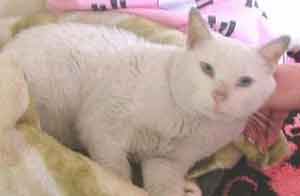
Cute Kittens with Blue Eyes

Who wants to happier lives, protect the cats. Cats make our life more beautiful. When we see their farcical behavior. When they walk and spoiled, when they play with other cat. Cat is the most risible animals in the world's.

Tuesday, May 10, 2011

There's Nothing Like A Cute Cat


By Michelle Bery

There comes a time in everyone’s home when it must be decided if it’s going to be a home with a pet or a home without. This is an easier decision for some than it is for others; there are some of us who grew up in a home that was never without a dog or cat; there are others of us who did not have a pet growing up and are eager to fulfill this childhood dream in adulthood. Ultimately, pet ownership is a choice only your family can make, as is the type of pet you choose - for dog lovers, a friendly pooch; for feline lovers, a cute cat.

But let’s face it; a cute cat is subjective. Cats come in a variety of breeds – in all sizes, colors, hair lengths, and personalities. A cute cat for one person may be a sparkly eyed Burmese; for another a sleek Siamese. When choosing a cute cat, it is most important to take into consideration your particular needs as a cat owner. If you are someone who enjoys company from your pet, then you may want to find a cute cat that’s friendly and people-oriented. If you are a busy professional who is content to see your cat over a meal, then there are number of independent-minded cats that like their personal space.

When choosing a cute cat for your family it is also important to be mindful of the amount of grooming that each particular cat breed requires. Longer-haired cats need frequent grooming to keep their matting at bay; shorter-haired cats need far less grooming and may be best for busier households or for those who have allergies. Before purchasing any cat, however, it is important that you are prepared – not just for the grooming but for the space considerations, need for a litter box, diet and nutrition, and veterinary needs. It is essential that if you are going to be a cat owner that you are a responsible one.

Whether as a purchase for yourself or a wonderful gift for someone you love, a cute cat will brighten your world and change your home forever.

For easy to understand, in depth information about cute cat visit our ezGuide 2 Cats.

Article Source: http://EzineArticles.com/?expert=Michelle_Bery

Breeding Purebred Cats

If you are interested in breeding purebred cats for monetary gains, you have to consider the pros and cons first before going down this road. While the rewards are generous and rewarding, cat breeding is not for all. People have this mistaken perception that cat breeding is as easy as just letting cats mate. In fact it’s just the opposite. While earning money is part of the plan in breeding, it should not be the main motivating factor.

As a cat breeder, you must be responsible for the welfare and well being of your cats. Contingency plan should be in place to cater for unexpected changes. In the even of the owner backing out of a deal, you should have a ready place to keep the cat.

Besides having a sense of responsibility, you should also educate yourself well before going into breeding. Breeding purebred cats requires a great deal of knowledge about the written breed standards and general cat care. You need to find a seasoned mentor to work with, someone who has had prior experience with showing and breeding cats in order to become a successful breeder.

Breeding is also an expensive, time consuming and labor intensive activity, regardless of your chosen breed.
The food isn’t the only thing that’s expensive, as the vet bills can also get expensive. Even though you may go through the entire pregnancy without going to the vet, you’ll still need de-worming and vaccination medicines as well.

Another factor to consider before breeding cats is whether you have enough space for breeding. If you have a small apartment, you shouldn’t attempt to breed a cat.

One last thing to take note is whether your family is agreeable to the idea of breeding cats. If you family objects, it’s going to take a heavy strain on your relationship with your family if you don’t have their understanding and consent.

After learning about these things, it can be concluded that breeding is an arduous task indeed. However, for those who are cat breeders at heart, all these hardships are worth the kittens they bred (not produced)! A cat's life is more important than money. And it is more rewarding to see the kittens grow. The money earned is just an additional reward.

Breeding is not just about having many cats. It is about taking care of all of them.

In short, there are a lot of factors to consider where breeding is concerned. If you have already set your mind on it and you want to breed, you should be certain that you have the proper knowledge and everything you need before hand. You should always be ready to handle anything associated with breeding – and prepare yourself for the worst possible scenario.

Albert recently developed a eCourse for looking after your cat's mental and physical needs. If you are interest in learning more about this free eCourse and taking good care of your cat, please go to http://catcentral.justastore.com or you can send an email to catcentral@getresponse.com to request for your free eCourse.


Source: High Quality Article Database - 365articles.com

Ziggy - cat traveler

They say cats have nine lives. According to that, cat named Ziggy probably have eight lives now after his strange voyage. This cat traveled from northern Israel to Britain (England precisely) without taking any food or water. The trip was 2,300 miles (3900 kilometers) long. October 31 in Haifa, Israel, cat Ziggy wandered into a consignment of plastic goods in some boat. 17 days later, when ship arrived in England, cat appeared at a warehouse in Whitworth in Lancashire. He was emerged, exhausted, starving and dehydrated, but he jumped from box and resist capture from warehouse workers for five hours.

Ziggy - cat traveler

Ziggy the cat is in Royal Society for the Prevention of Cruelty to Animals quarantine now, while people in RSCPA trying to find cat owners in Israel. If you know someone in Israel, please spread a word about this and help Ziggy find home again.